
















 English (US)
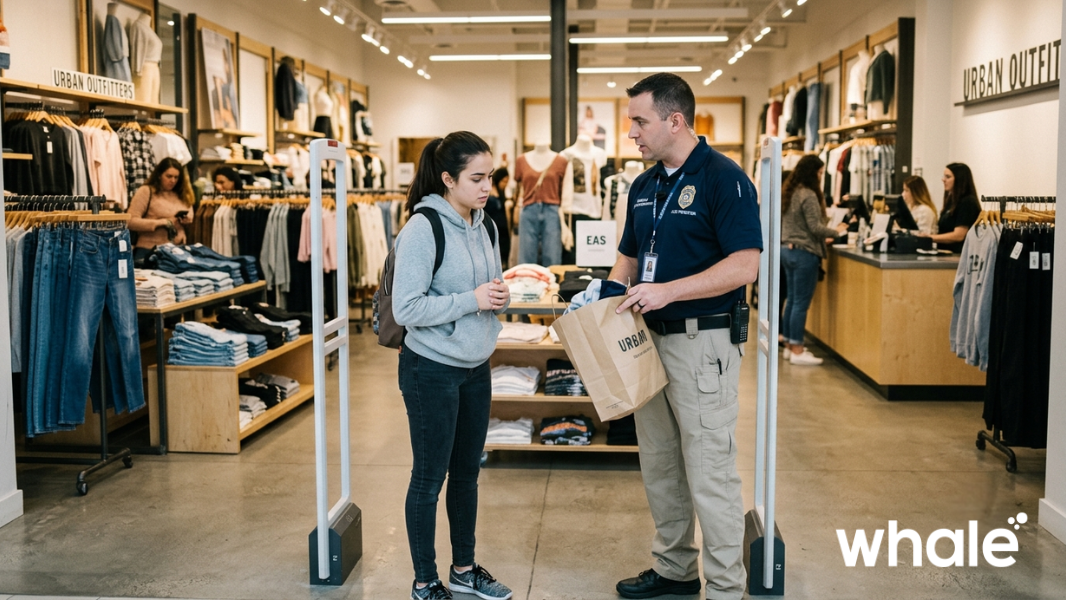
The budget for retail loss prevention has grown every year for the past decade. The number of cameras deployed has grown every year. The AI pilots, the self-checkout sensors, the EAS tags -- those have grown too. And yet shrink, the industry's term for all inventory that exits a store without generating revenue, hit $90 billion in the U.S. in 2025. $66 billion of that was classified as preventable.
That word 'preventable' is doing a lot of work in that sentence. It implies that the right tools and systems were either unavailable or not deployed. The harder truth is that most of the tools have been deployed. The problem is structural: the dominant approach to loss prevention is built around evidence collection, not incident prevention. Cameras record what happened. They do not stop what is happening.
Between 2019 and 2023, U.S. retailers saw a 93 percent increase in shoplifting incidents per year and a 90 percent increase in dollar losses over the same period, according to the NRF. That trajectory continued: shoplifting losses reached $47.8 billion in 2025, up from $45 billion the year before. If the existing system were working, those numbers would be going the other direction.
"$66 billion of last year's $90 billion in retail shrink was classified as preventable. The cameras were there. The losses happened anyway." -- NRF & Building Security Services, 2025-2026
This is the fundamental problem that loss prevention teams have been navigating for years: cameras are evidence tools, not response tools. An LP associate monitoring a wall of feeds is watching dozens of simultaneous scenes, most of which are nothing -- and trying to catch the one that is not. The math does not work at scale. And by the time footage is reviewed, the loss is already permanent.
Organized Retail Crime Changed the Scale of the Problem
Traditional shoplifting is one category. Organized retail crime is another. ORC rings are coordinated, mobile, and sophisticated -- they hit multiple locations in a single day, carry concealment equipment, use lookouts, and exploit the response lag that manual LP creates. The NRF reports that each ORC incident now averages more than $700,000 in losses for affected retailers. In 2025, more than half of surveyed retailers reported increases across multiple ORC categories: merchandise theft (52 percent), digital fraud (55 percent), and cargo theft (50 percent).
The violence dimension compounds this. Between 2023 and 2024, retailers tracking security events documented a 17 percent increase in threats or acts of violence during theft incidents, and a 16 percent increase in incidents involving the display or use of a weapon. For the people working the floor, the stakes of a confrontation have materially changed. The system's response lag is not just a financial problem -- it is a safety problem for staff.
What AI Loss Prevention Actually Changes
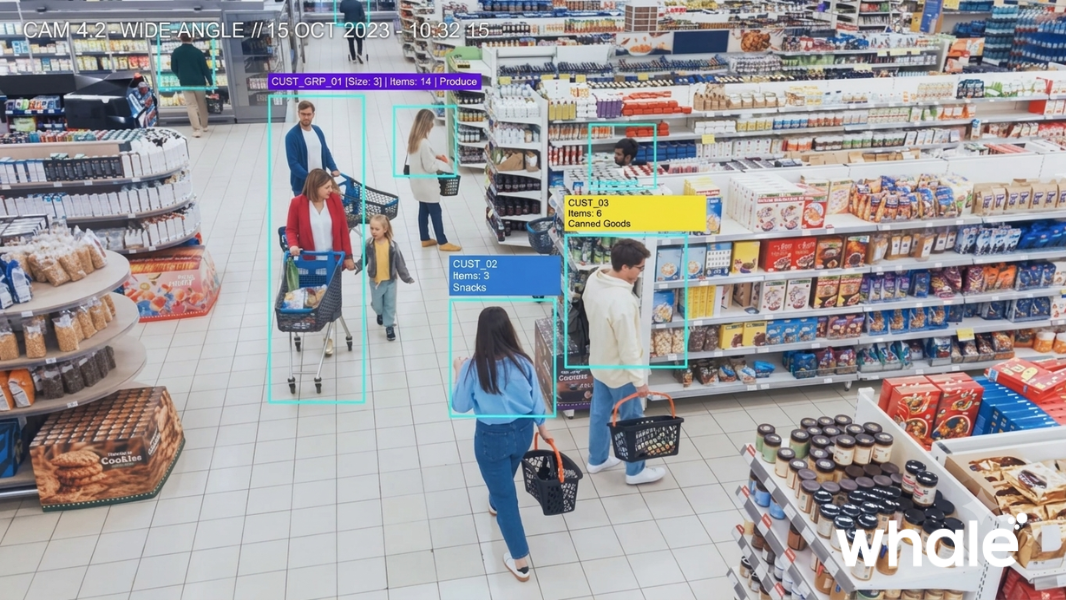
The shift that AI enables is not incremental improvement on the existing model. It is a structural change from reactive to proactive. A Vision Language Model running on your existing camera infrastructure analyzes every frame in real time, comparing behavioral patterns against thousands of known incident signatures: concealment behavior, anomalous dwell near high-shrink zones, staff protocol violations, after-hours access. When a match occurs, an alert routes immediately -- before the loss, not after it.
Early results from AI loss prevention deployments show up to 30 percent shrink reduction in high-risk stores within the first year, and 50 percent faster incident resolution times when AI is handling detection and packaging evidence. The speed change matters: the gap between seeing something and doing something about it compresses from hours or days to seconds. That gap is where the $66 billion in preventable losses lives.
- AI Retail Loss Prevention: Why $90 Billion in Annual Shrink Demands a New Approach
- Retail Store Compliance Monitoring: Why Audit Day Tells You Almost Nothing
- The $9 Billion OOH Attribution Gap: Why Physical Ad Spend Still Runs on Faith
- Retail Workplace Violence Prevention: What AI Catches Before Panic Buttons Help
- In-Store Retail Media Measurement: Why 84% of Sales Happen Where 1% of Ad Spend Goes
- Energy, Passion, and the Future of AI
- Whale Secures $60 Million to Expand its Enterprise AI Suite Globally
- Introducing Echo
- Whale Raises $40M Series C3 Extension, Bringing Total Series C to $100M, to Scale Global Enterprise AI Operations
- Check Out Whale's Open Space, Where AI Meets the "Lead to Win" Spirit
- How SpaceSight Works in Standardizing and Improving Operational Efficiency for Car Workshop
- 3 Ways to Improve Conversion Rate for the Automotive Industry
- How GIORGIO ARMANI Redesigned Success Metrics Across Multiple Stores
- How GXG Leveraged Footfall Analytics for Smarter Employee Management
- From Browsing to Buying: Use SpaceSight to Optimize Sales Through Product Placement
- How Supermarket Chains Improve Inspection Efficiency with Smart Technology
- Build Consistent Customer Dining Experience with SpaceSight Onsite Inspection
- How SpaceSight Improved Inspection Efficiency for Chain Restaurants
- Four Management Practices to Ensure Food Safety in Your Kitchen
- Why Retail Managers Need Inspection Software for Store Management
- Navigating the Future of Retail with AI with OPPO Indonesia
- How to Use Footfall Analytics to Improve Customer Service








-
 Capability Maturity Model Integration Certification
 -
 Information Security Management System Certification
 -
 Quality Management System Certification
 -
 Accreditation@SGD Certificate from the Singapore Infocomm Media Development Authority
 -
 SOC 2, System and Organization Controls 2
 -
 HIPAA Compliant
 -
 General Data Protection Regulation (GDPR)
-
 Schedule a demoProfessional consultants will provide a brief explanation lasting at least 20 minutes to help you evaluate and use Weve products more efficiently. Please leave your contact information, and we will contact you as soon as possible to schedule a demonstration time.
 -
 Scan to followStay updated with the latest news anytime, anywhere
 Whale Instagram Page
 Whale Linkedin Page
 -
 Customer Service CenterProvide one-on-one consultation and technical support for products and solutions
-
 Back to top