
















 English (US)
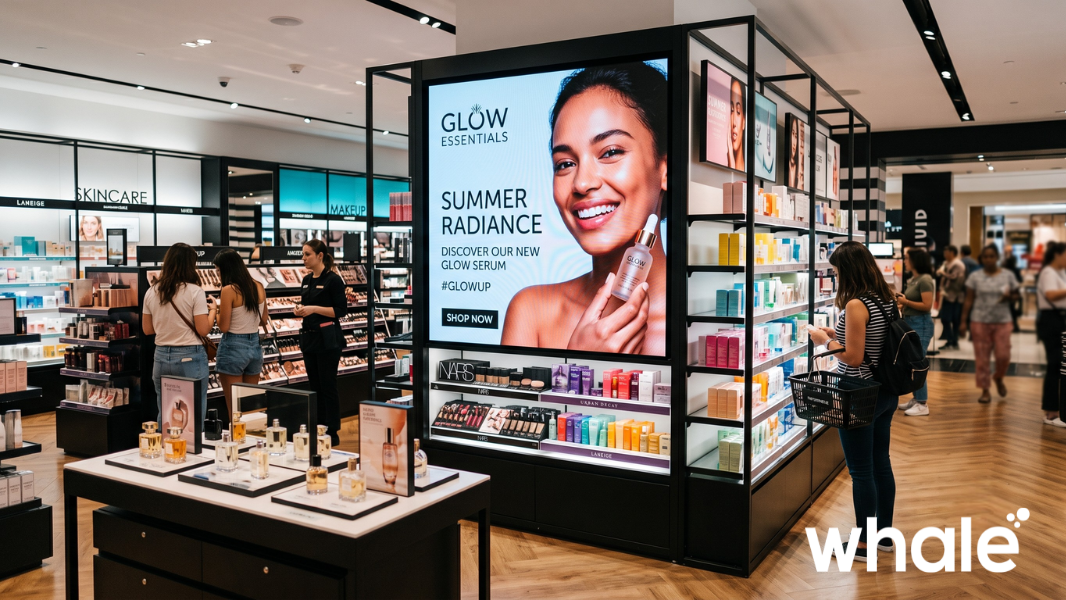
Sephora now generates 30 percent of its total revenue from retail media -- from selling advertising access to its shoppers, not from selling products. That number gets cited often in retail media conversations, usually as evidence of how large the opportunity is. What gets cited less often is the mechanism that made it possible: measurement. Sephora did not build a nine-figure media business by selling brands on intuition about in-store traffic. They built it by giving brand partners data.
That data is the bottleneck for every other retailer trying to do the same thing. In 2024, U.S. retail media networks generated $140 billion in advertising revenue, growing to a projected $166 billion in 2025. The leaders are Amazon, Walmart, and Target -- all of whom built their initial media businesses on online advertising, where measurement infrastructure already existed: impressions, viewability, click-through rates, multi-touch attribution. Moving that model into the physical store is where it gets complicated.
84 percent of U.S. retail sales happen in brick-and-mortar locations, according to Forrester's 2024 data. Yet according to eMarketer's 2025 analysis, over 99 percent of retail media advertising remains online. The physical store -- where the overwhelming majority of purchasing actually happens -- is capturing almost none of the brand advertising investment that retail media has unlocked. The reason is not that brands do not want to reach in-store shoppers. The reason is that they cannot yet prove the ads worked.
The Measurement Gap That Keeps Brand Budgets Online
Online advertising gives buyers two decades of measurement infrastructure. You know exactly how many people saw an ad, for how long, whether they were in view, and what happened afterward. That precision is why digital ad budgets are large and growing -- not because digital audiences are more valuable, but because digital performance is more legible.
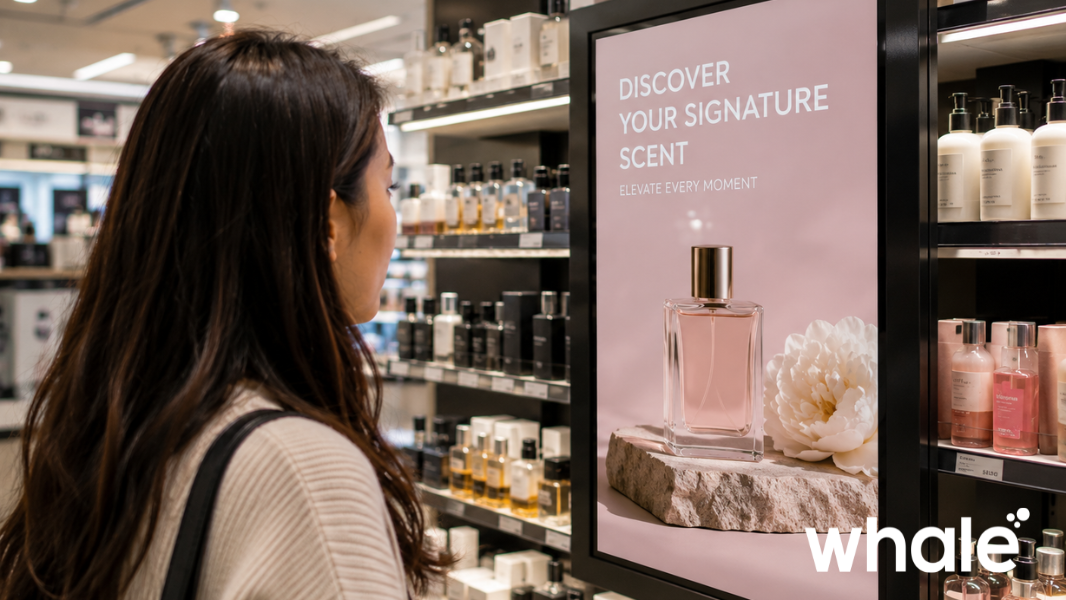
In-store screens cannot currently offer this. A brand buys a slot near your checkout queue. You tell them it is a high-traffic location. You cannot tell them how many people actually faced the screen, what the average attention duration was, or whether sales of the advertised product lifted in that location during the campaign window. The IAB acknowledged this explicitly in December 2025, releasing a new in-store measurement framework and noting that 'adoption has been slow due to operational complexity and inconsistent standards.' A March 2025 Koddi survey found that 1 in 4 media buyers cited difficulty accessing in-store reach as a top challenge -- not lack of interest, difficulty with the product they would be buying.
"Brands are not avoiding in-store media because they don't want the audience. They're avoiding it because they can't verify what they bought. The IAB released its first in-store measurement framework in December 2025. That gap is closing." -- IAB In-Store Media Framework, 2025 / Koddi, March 2025
The gap between in-store's share of sales (84 percent) and its share of ad spend (under 1 percent) is not a preference gap -- it is a measurement gap. Close the measurement gap, and the money follows. eMarketer is already forecasting in-store retail media ad spending to grow 47 percent in 2025, with in-store digital screen spending projected to surpass $580 billion by 2026 in the U.S. That growth is being driven by retailers who are beginning to offer brand partners actual impression data, not just location descriptions.
Computer vision closes this gap. The same AI that tracks customer zone traffic can measure screen viewership: how many people were within sightline, how many faced the screen, average attention duration, and audience composition by hour -- all without capturing personally identifiable data. That measurement layer transforms a screen placement into a verifiable media product. It lets you report a campaign result rather than a campaign run.
Whale's SpaceSight provides in-store screen measurement at the campaign level, integrated with Whale's Lume platform for content management and distribution. Retailers using this combination can run targeted campaigns, track real viewership, and deliver post-campaign reports to brand partners with the same rigor as a digital buy. The retailers who build this measurement capability now are the ones who will capture the brand budgets that have nowhere credible to go in-store yet -- but are looking.
Referenced in this article:
Modern Retail -- Retail Media Networks in 2025: modernretail.co/marketing/with-every-company-entering-the-ad-business-heres-what-to-expect-from-retail-media-networks-in-2025/
Fugo.ai -- Retail Media Growth Statistics and Trends 2026: fugo.ai/blog/retail-media-growth-statistics-trends/
Osmos.ai -- In-Store Retail Media 2026: osmos.ai/blog/retail-instore-media-digital-screens-2026
eMarketer via Marketing LTB -- Retail Media Networks Statistics 2025: marketingltb.com/blog/statistics/retail-media-networks-statistics/
Nielsen -- The Future of Retail Media 2025: nielsen.com/insights/2025/future-retail-media/
CSP Daily News -- New In-Store Retail Media Measurement Approaches: cspdailynews.com/technologyservices/new-store-retail-media-measurement-approaches-are-emerging
Forrester via Chain Store Age -- Physical Stores 84% of U.S. Retail Sales 2024: chainstoreage.com/forrester-physical-stores-account-72-us-retail-sales-2024
- In-Store Retail Media Measurement: Why 84% of Sales Happen Where 1% of Ad Spend Goes
- Retail Store Compliance Monitoring: Why Audit Day Tells You Almost Nothing
- The $9 Billion OOH Attribution Gap: Why Physical Ad Spend Still Runs on Faith
- AI Retail Loss Prevention: Why $90 Billion in Annual Shrink Demands a New Approach
- Retail Workplace Violence Prevention: What AI Catches Before Panic Buttons Help
- Whale Raises $40M Series C3 Extension, Bringing Total Series C to $100M, to Scale Global Enterprise AI Operations
- Energy, Passion, and the Future of AI
- Whale Secures $60 Million to Expand its Enterprise AI Suite Globally
- Check Out Whale's Open Space, Where AI Meets the "Lead to Win" Spirit
- Introducing Echo
- 3 Ways to Improve Conversion Rate for the Automotive Industry
- How SpaceSight Works in Standardizing and Improving Operational Efficiency for Car Workshop
- How GIORGIO ARMANI Redesigned Success Metrics Across Multiple Stores
- How GXG Leveraged Footfall Analytics for Smarter Employee Management
- From Browsing to Buying: Use SpaceSight to Optimize Sales Through Product Placement
- How Supermarket Chains Improve Inspection Efficiency with Smart Technology
- How SpaceSight Improved Inspection Efficiency for Chain Restaurants
- Four Management Practices to Ensure Food Safety in Your Kitchen
- Build Consistent Customer Dining Experience with SpaceSight Onsite Inspection
- Why Retail Managers Need Inspection Software for Store Management
- How to Use Footfall Analytics to Improve Customer Service
- Navigating the Future of Retail with AI with OPPO Indonesia








-
 Capability Maturity Model Integration Certification
 -
 Information Security Management System Certification
 -
 Quality Management System Certification
 -
 Accreditation@SGD Certificate from the Singapore Infocomm Media Development Authority
 -
 SOC 2, System and Organization Controls 2
 -
 HIPAA Compliant
 -
 General Data Protection Regulation (GDPR)
-
 Schedule a demoProfessional consultants will provide a brief explanation lasting at least 20 minutes to help you evaluate and use Weve products more efficiently. Please leave your contact information, and we will contact you as soon as possible to schedule a demonstration time.
 -
 Scan to followStay updated with the latest news anytime, anywhere
 Whale Instagram Page
 Whale Linkedin Page
 -
 Customer Service CenterProvide one-on-one consultation and technical support for products and solutions
-
 Back to top